
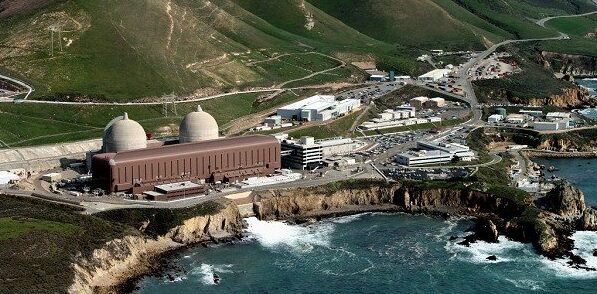
 The San Luis Obispo County Board of Supervisors is slated to approve an agreement Tuesday that, in emergency situations, will allow the county’s branch of Cal Fire to purchase desalinated water from Diablo Canyon Power Plant.
Pacific Gas & Electric operates a desalination facility at Diablo Canyon that produces more water than is needed at the power plant. Also, the desalination plant is only producing 40 to 50 percent of what is capable of, according to a county staff report.
The water that the county fire department intends to buy is non-potable and is expected to be used for firefighting purposes or for use in other emergencies. Cal Fire has not yet indicated how much desalinated water it plans to purchase.
The proposed agreement, which is on the board of supervisor’s consent agenda, calls for the county to pay PG&E $3.34 per 1,000 gallons, or $1,086 per acre foot of water. The rate will increase 3 percent yearly.
Cal Fire plans to transport the water by truck and possibly store it in 20,000-gallon inflatable bladders, according to the staff report.
Some county residents and officials are calling for increased use of Diablo Canyon’s desalination plant. The county may explore the feasibility of a pipeline from the power plant that could make for a new source of drinking water.
Don’t miss breaking news stories, like CCN on Facebook.
[face]


Heroes and Zeros
In a classic example of the wasteful ways of the toxic, polluting energy industry, a method of cooling was built into the power plants of the 1950’s. This method was called ‘single pass’ cooling, or ‘once through’ cooling. I always explain it this way: “See that power plant over there? See those three big smoke stacks? Well, there are actually four stacks, but one of the you can’t see because it is underwater.”
A simplistic explanation of course, but effective. That ‘fourth stack’ sucks in seawater at an amazing rate, and kills 95% of everything inside. Seawater is actually habitat, and in that habitat dwell plankton. Everything in the ocean (except birds and mammals) spends at least part of its life as plankton. Sea stars, Clown fish, Grouper, crab, lobster, shark, Sea fan, -EVERYTHING.
So these power plant intakes suck it all in- even adult sea otters have been known to die in these intakes. In effect, a once through cooling intake acts just like a giant super predator off the coast, drastically reducing the abundance of sea life.
Enter, the heroes: The good people of the California State Water Resource Control Board and their amazing staff. These people have done a lot of good things, including protecting redwoods from logging, but that’s another story.
Not too long ago, I met in the State Capitol offices of the California Ocean Protection Council with Drew Bonham (former Santa Barbara Coastkeeper and then- OPC staff member- he’s gone now) and I showed him a map of the Morro Bay Estuary and all the terrible impacts going on there. He asked me “If you had to choose one thing, which would it be?” and I said “Once through cooling.”
As it turned out, many activists and organizations all said the same thing- once through cooling must go. Now, the fishermen in Morro Bay didn’t agree even though once through cooling kills plankton and therefore, fish. But they based their position on the fact that PG&E bought many of them brand new diesel engines for their fishing boats! This was done as a mitigation agreement to make up for the deadly chemicals being spewed out the stacks of the Morro Bay Power Plant, now defunct.
But the rest of us -and we were wildly diverse- the rest of us all got on the same page and called Once Through Cooling the scourge of the west. And so the Ocean Protection Council wrote and passed a resolution against once through cooling, and the State Water Resource Control Board began enforcement.
Throughout California and the west coast, the once through cooling seawater intakes of coastal power plants suck in a staggering 17.5 billion gallons a day and kill 95% of all life within those doomed gallons. Then they spit it out an outfall back into the ocean as a toxic, witches cauldren of hot bacteria soup called brine. Don’t be fooled- brine isn’t salt for your breakfast table shaker. It’s concentrated impurity, all the bad things dumped into the sea (like jet exhaust for instance).
So the SWRCB ordered all power plants to make the switch to ‘Best Technology Available’. This means replacing the ‘fourth stack’ with cooling towers, that shoot the heated water from the plant into the air instead of the ocean. The water cools within the cooling towers and falls back down to be used again, over and over, no plankton killed!
Sometimes the bad guys like to say that desalination units don’t matter because the once through cooling has already killed all the plankton anyway. But according to a study by a reputable regulatory compliance company called Tenera doing 316 (b) studies*, once through cooling kills ‘only’ 95% of the plankton sucked in. But slap on a desal unit to that intake and the mortality rate becomes 100%.
PG&E at Diablo Canyon has been directed to upgrade to cooling tower technology. They don’t want to pay for it and it is admittedly very costly. So costly that it is better to shut the nuclear plant down forever. As if we needed another reason.
So as an end run around compliance, PG&E is trying extend the life of Diablo Canyon Nuclear Power Plant by touting their desalination unit as a viable new drinking water source for San Luis Obispo County!
There is a facebook page called ‘Diablo-Desal is a big lie only’ that is dedicated to documenting the upcoming battle between PG&E and the fish, the otters, the plankton, the residents, the regional cancer surge that corresponds with the date the nuke plant began operation, and the poor unsuspecting people who will be at risk from the 500 lbs of nuclear waste when they accidentally dig it up someday, two hundred and fifty thousand years from now.
joey racano
Ocean Outfall Group
‘Where were you when Diablo Blew’?
*316 (b)- the section of the Clean Water Act dealing with ambient heat. Brine is generlly dumped into the ocean at 30 degrees above ambient temperature, requiring power plants to get a 316 (b) ‘waiver -jr